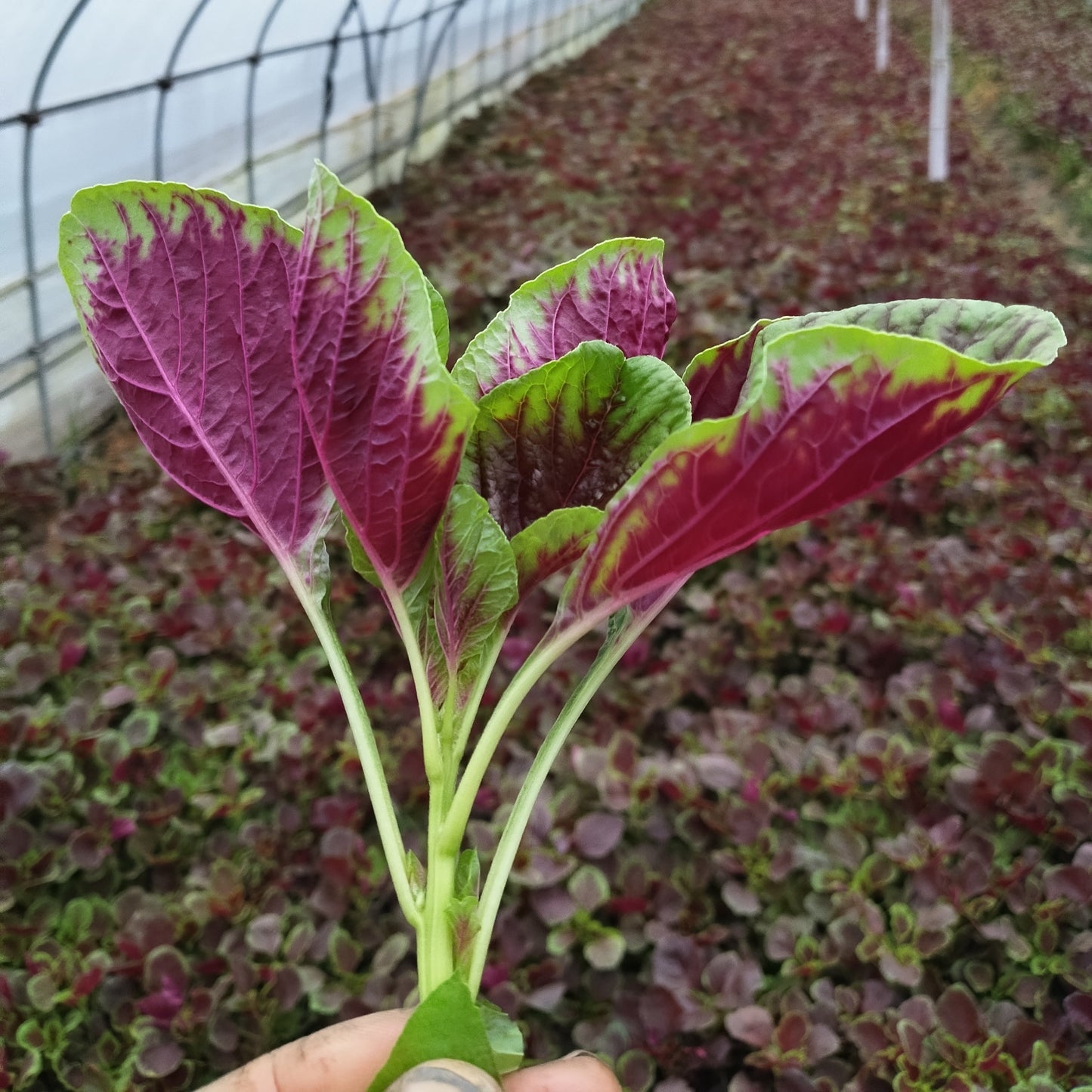
Red Amaranth - Lal Saag (लाल साग)
Red Amaranth - Lal Saag (लाल साग)
🌿 Red Amaranth - Lal Saag (लाल साग) — Nepal's Beloved Crimson Superfood Green
Red Amaranth — known and loved across Nepal as Lal Saag — is one of the most nutritionally powerful and visually striking leafy greens in South and East Asian cuisine. With its deep crimson-red leaves and stems that bleed a beautiful magenta color when cooked, Lal Saag is as dramatic on the plate as it is nourishing in the body. A staple of Nepali home cooking for generations, it is prized for its earthy, slightly sweet flavor, its exceptional iron and calcium content, and its remarkable concentration of anthocyanin antioxidants. Cultivated with care at RUBY FARM, our Red Amaranth is harvested at peak color and nutrition — a deeply rooted, genuinely healthy green that belongs in every Nepali kitchen.
🌟 Why It's Perfect for Your Home
Stunning Crimson Color — Deep red leaves and stems that release a beautiful magenta hue when cooked — one of the most visually dramatic vegetables in any cuisine.
Anthocyanin Powerhouse — The deep red pigment signals an exceptional concentration of anthocyanin antioxidants — the same powerful compounds found in blueberries and red cabbage.
Exceptional Iron & Calcium Content — One of the richest plant-based sources of both iron and calcium — a true nutritional powerhouse for vegetarians and growing families.
Earthy, Satisfying Flavor — Mild, slightly earthy and sweet — a deeply familiar and comforting flavor beloved in Nepali, Indian, and Chinese home cooking.
Quick & Easy to Cook — Ready in minutes whether stir-fried, sautéed with garlic, or added to dal and soups.
🌱 Nutritional Profile
- Exceptionally rich in iron — one of the best plant-based sources of iron, essential for red blood cell production, energy, and preventing anemia
- High in calcium — supports strong bones and teeth; particularly valuable for those who do not consume dairy
- Rich in anthocyanins — powerful antioxidants responsible for the deep red color, with anti-inflammatory and cardiovascular-protective effects
- Good source of Vitamin C — boosts immunity and significantly enhances iron absorption from plant sources
- Contains Vitamin K — essential for bone health and blood clotting
- Good source of folate (Vitamin B9) — supports cell growth and is especially important during pregnancy
- Contains protein — amaranth is one of the few leafy greens with a meaningful protein content
- Rich in dietary fiber — supports healthy digestion and gut microbiome
🌟 Health Benefits
- Combats iron-deficiency anemia — especially valuable for women, children, vegetarians, and those with low iron levels
- Supports bone strength through calcium and Vitamin K — an excellent dairy-free calcium source
- Powerful antioxidant protection from anthocyanins — helps neutralize free radicals, reduce inflammation, and slow cellular aging
- Supports cardiovascular health through anthocyanins, potassium, and anti-inflammatory compounds
- Boosts immunity with Vitamin C — which also enhances iron absorption when consumed together
- Supports healthy pregnancy through folate and iron content
- Promotes healthy digestion with natural dietary fiber
🍽️ How to Enjoy
- Stir-fry with garlic (classic Nepali style) — sauté with mustard oil, garlic, and a pinch of salt for a simple, deeply satisfying side dish — the leaves turn a beautiful deep magenta
- Dal with Lal Saag — add to lentil dal in the last few minutes of cooking for a nutritious, colorful, and traditional Nepali combination
- Stir-fry Chinese style — cook over high heat with garlic and oyster sauce for a quick, flavorful side
- Soup — add to clear broths or vegetable soups for a nutritious, colorful addition
- Blanched — blanch briefly and serve with sesame oil and light soy sauce for a clean preparation
- Tip: pair with Vitamin C-rich foods (lemon, tomato) to maximize iron absorption
- Storage tip: refrigerate unwashed; consume within 2–3 days for best color and nutrition — freshness is key
⚠️ Who Should Take Caution
- Suitable: general healthy adults, children, pregnant women (excellent iron and folate source), vegetarians, and those with iron deficiency or anemia
- Caution — Kidney stones: amaranth is high in oxalates, which can contribute to calcium-oxalate kidney stones in susceptible individuals; those with a history of kidney stones should limit intake
- Caution — Blood thinners (warfarin): contains Vitamin K which may interact with anticoagulant medication; maintain consistent intake and consult a doctor
- Caution — Gout or high uric acid: contains purines; those with gout should consume in moderation
- Tip: cooking reduces oxalate content — always cook rather than eat raw for those with kidney concerns
🏡 Why It's Recommended For Your Home
- Freshly grown at RUBY FARM — no preservatives, no chemicals, harvested at peak color and nutritional value
- A beloved Nepali kitchen staple — Lal Saag is part of the cultural and culinary heritage of Nepal
- One of the richest plant-based sources of iron and calcium available as a fresh vegetable
- Brings stunning color, deep nutrition, and authentic Nepali flavor to every meal
- A true superfood green that has nourished generations — now freshly available from RUBY FARM
Couldn't load pickup availability
Out of stock
View full details